
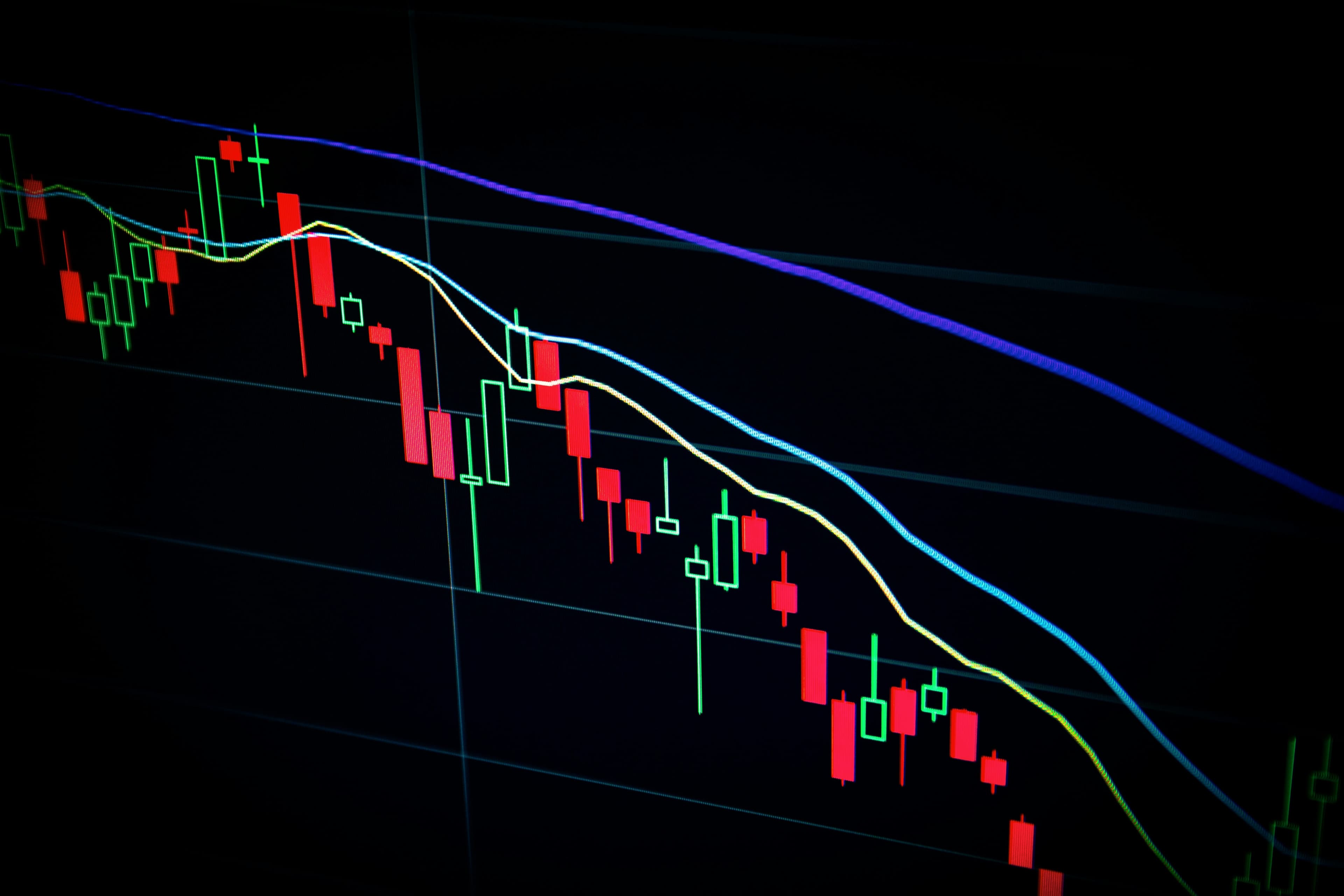
Stop drowning in financial headlines. Learn how to filter market noise, identify what actually matters, and stay informed without information overload.
Open your phone. Check Bloomberg. Scroll Twitter. Read Seeking Alpha. Watch CNBC. Check Reddit. Back to Bloomberg.
Sound familiar?
If you're a retail investor, you're probably drowning in financial news. Every day brings hundreds of headlines, analyst opinions, earnings reports, economic data, and hot takes. It's exhausting—and worse, most of it doesn't matter.
Here's the uncomfortable truth: More information doesn't lead to better investment decisions. In fact, too much news can lead to:
- Analysis paralysis (overthinking every decision)
- Emotional trading (reacting to headlines instead of fundamentals)
- Wasted time (hours spent reading, little value gained)
But you can't just ignore the news either. Some information does matter. The key is learning to separate signal from noise.
In this guide, you'll learn:
- Why most financial news is noise (and what actually matters)
- How to build an efficient news-reading system
- Tools and strategies to filter information overload
- How to avoid emotional reactions to headlines
Let's take back control of your information diet.
The Problem: Why Financial News is Overwhelming
1. Volume Overload
The financial media operates 24/7. Every minute, there are:
- Breaking news alerts
- Analyst upgrades/downgrades
- Economic data releases
- Earnings reports
- CEO interviews
- Market commentary
Result: You feel like you're always behind, always missing something important.
2. Noise vs. Signal
Most financial news falls into one of these categories:
Noise (90% of headlines):
- Short-term price movements ("Stock XYZ up 2% today")
- Speculation and rumors ("Could Apple buy Disney?")
- Repetitive earnings previews
- Clickbait ("This stock could 10x!")
- Macro commentary that doesn't affect your portfolio
Signal (10% of headlines):
- Material business changes (new products, acquisitions, leadership changes)
- Regulatory developments that impact industries
- Earnings results that reveal trends
- Insider buying/selling
- Competitive threats or opportunities
The challenge: Distinguishing signal from noise requires experience and discipline.
3. Conflicting Opinions
One analyst says "Buy." Another says "Sell." CNBC is bullish. Twitter is bearish. Who's right?
Answer: Nobody knows. Markets are unpredictable in the short term.
Better question: What information helps you make a long-term decision?
4. Emotional Manipulation
Financial media thrives on fear and greed. Headlines are designed to trigger emotions:
- "Market Crash Coming?" (fear)
- "This Stock Could Double!" (greed)
- "You're Missing Out on the AI Boom!" (FOMO)
Result: You make impulsive decisions based on emotion, not analysis.
What Actually Matters in Financial News?
Not all news is created equal. Here's what you should actually pay attention to:
Tier 1: High-Impact News (Always Read)
✅ Earnings reports for companies you own or are researching
✅ Material business changes: Acquisitions, divestitures, new products, leadership changes
✅ Regulatory changes that affect your holdings (e.g., new laws, FDA approvals)
✅ Insider trading activity: Large buys or sells by executives
✅ Competitive threats: New entrants, disruptive technology
Why it matters: These events directly impact a company's fundamentals and long-term value.
Tier 2: Medium-Impact News (Skim Selectively)
⚠️ Analyst upgrades/downgrades: Useful for understanding sentiment, but often lagging
⚠️ Economic data: GDP, unemployment, inflation (matters for macro investors)
⚠️ Industry trends: Shifts in consumer behavior, supply chain issues
⚠️ Market commentary: Useful for context, but don't trade on it
Why it matters: Provides context and helps you understand broader trends.
Tier 3: Low-Impact News (Ignore or Skim)
❌ Daily price movements: "Stock XYZ up 3% today" (unless there's a reason)
❌ Speculation and rumors: "Could Company A buy Company B?"
❌ Clickbait: "Top 10 stocks to buy now!"
❌ Repetitive previews: "What to expect from earnings season"
❌ Celebrity investor opinions: Unless they're explaining their reasoning
Why it doesn't matter: Short-term noise that doesn't affect long-term value.
How to Build an Efficient News-Reading System
Stop consuming news reactively. Instead, create a structured system that saves time and reduces overwhelm.
Step 1: Define Your Information Needs
Ask yourself:
- What am I trying to achieve? (Long-term investing? Day trading? Learning?)
- What companies/sectors do I care about?
- How much time can I realistically spend on news? (15 min/day? 1 hour/week?)
Example:
"I'm a long-term investor focused on tech stocks. I want to stay informed on my 10 holdings and spot new opportunities. I have 20 minutes per day."
Step 2: Choose 2-3 Core Sources
Don't try to read everything. Pick 2-3 high-quality sources and stick to them.
Recommended sources by goal:
For broad market news:
- Bloomberg or Financial Times (comprehensive, professional)
- Wall Street Journal (business-focused, well-written)
For stock-specific analysis:
- Seeking Alpha (crowdsourced analysis, diverse opinions)
- The Motley Fool (beginner-friendly, long-term focus)
For real-time updates:
- Twitter/X (follow credible analysts and journalists)
- Reddit (r/investing, r/stocks) (community insights, but verify claims)
For earnings and filings:
- SEC EDGAR (official source)
- Company investor relations pages
- **MoneySense AI** (AI-powered summaries)
Pro tip: Use an RSS reader (like Feedly) to aggregate your sources in one place.
Step 3: Set a News Schedule (and Stick to It)
Don't check news constantly. It's distracting and unproductive.
Instead, create a routine:
Option 1: Daily Check-In (15-20 minutes)
- Morning: Skim headlines from your core sources
- Focus on companies you own or are researching
- Ignore everything else
Option 2: Weekly Deep Dive (1-2 hours)
- Sunday evening: Review the week's major news
- Read earnings reports for your holdings
- Research one new company or trend
Option 3: Event-Driven (As Needed)
- Only read news when something happens to your holdings
- Set up alerts for earnings, SEC filings, and material events
Key principle: Batch your news consumption. Don't let it interrupt your day.
Step 4: Use Alerts and Filters
Let technology do the work for you.
Set up alerts for:
- Earnings releases (your holdings)
- SEC filings (8-K, 10-K, 10-Q)
- Price movements above a threshold (e.g., +/- 5%)
- Insider trading activity
Where to set alerts:
- Google Alerts (free, customizable)
- Yahoo Finance (stock-specific alerts)
- Seeking Alpha (earnings, news, filings)
- TradingView (price alerts)
Pro tip: Use MoneySense AI to get instant summaries of financial articles and earnings reports—no need to read full documents.
Step 5: Filter by Relevance
Not all news about your holdings matters. Ask:
Does this change my investment thesis?
- Yes: Read it carefully and consider action
- No: Ignore it
Examples:
Relevant news:
"Apple announces new product category" → Could drive revenue growth
"Tesla recalls 500,000 vehicles" → Could impact margins and brand
Irrelevant noise:
"Apple stock up 1% today" → Normal volatility
"Analyst predicts Tesla will hit $500" → Opinion, not fact
How to Avoid Emotional Reactions to Headlines
Financial news is designed to provoke emotions. Here's how to stay rational:
1. Pause Before Reacting
When you see a shocking headline:
- Don't trade immediately
- Read the full article (not just the headline)
- Check multiple sources
- Sleep on it
Rule of thumb: If you feel a strong urge to buy or sell, wait 24 hours.
2. Distinguish Facts from Opinions
Facts:
- "Company X reported revenue of $10 billion"
- "The Fed raised interest rates by 0.25%"
Opinions:
- "This stock is a buy"
- "The market will crash soon"
Always prioritize facts. Opinions are just noise.
3. Ignore Short-Term Price Movements
Daily price changes are mostly random. Unless there's a clear reason (earnings, news event), don't overthink it.
Remember: Stock prices fluctuate. Business value doesn't change that fast.
4. Focus on Your Investment Thesis
Before reading news, write down why you own each stock. Then ask:
Does this news change my thesis?
- Yes: Reassess your position
- No: Ignore the noise
Example thesis:
"I own Amazon because of its dominance in e-commerce and cloud computing. I believe AWS will drive long-term growth."
Relevant news: AWS loses a major client → Reassess
Irrelevant news: Amazon stock down 2% today → Ignore
Tools to Filter Financial News Overload
1. RSS Readers
Aggregate all your sources in one place.
Recommended:
- Feedly (free, customizable)
- Inoreader (advanced filtering)
2. News Aggregators
Finviz (free stock screener with news feed)
Benzinga (real-time news, squawk)
Seeking Alpha (stock-specific news and analysis)
3. AI-Powered Summarizers
**MoneySense AI** (instant summaries of articles, earnings, filings)
ChatGPT (paste articles for quick summaries)
Perplexity AI (research assistant for financial questions)
4. Browser Extensions
MoneySense AI Chrome Extension (analyze articles as you browse)
Pocket (save articles to read later)
Readwise (highlight and organize key insights)
5. Alerts and Notifications
Google Alerts (custom keyword alerts)
IFTTT (automate news delivery)
Telegram/Discord bots (real-time market updates)
The 80/20 Rule for Financial News
80% of value comes from 20% of information.
Focus on:
- Earnings reports (quarterly results for your holdings)
- SEC filings (10-K, 10-Q, 8-K for material events)
- Industry trends (macro shifts that affect your sectors)
Ignore:
- Daily price commentary
- Speculation and rumors
- Repetitive previews and recaps
- Celebrity investor hot takes
Result: You'll spend less time reading and make better decisions.
Common Mistakes to Avoid
Mistake 1: Reading Everything
You can't read every article. Prioritize ruthlessly.
Mistake 2: Confusing Activity with Progress
Spending 3 hours reading news doesn't make you a better investor. Quality > Quantity.
Mistake 3: Chasing Headlines
Don't buy a stock just because you saw a bullish article. Do your own research.
Mistake 4: Ignoring Your Investment Thesis
News should inform your thesis, not replace it. Stay disciplined.
Mistake 5: Letting FOMO Drive Decisions
You'll always miss some opportunities. That's okay. Focus on what you know.
Your Action Plan: Start Today
Here's how to implement this system right now:
Week 1: Audit Your Current Habits
- Track how much time you spend on financial news
- Identify which sources you use most
- Note which articles actually helped you make decisions
Week 2: Build Your System
- Choose 2-3 core news sources
- Set up alerts for your holdings
- Create a news-reading schedule (daily or weekly)
Week 3: Optimize and Refine
- Cut sources that don't add value
- Use AI tools to summarize long articles
- Focus on signal, ignore noise
Week 4: Evaluate Results
- Are you spending less time on news?
- Do you feel less overwhelmed?
- Are your decisions improving?
Pro tip: Use MoneySense AI to instantly analyze any financial article and get the key takeaways in seconds—no more reading 2,000-word articles that could be summarized in 3 bullet points.
Final Thoughts: Less is More
The best investors don't read the most news. They read the right news.
Key principles:
- Quality over quantity: 3 high-quality sources beat 20 mediocre ones
- Signal over noise: Focus on material events, ignore daily volatility
- Thesis over headlines: Let your investment thesis guide your reading
- Batch over constant: Check news on a schedule, not all day
Remember: Warren Buffett doesn't watch CNBC all day. He reads annual reports and thinks long-term.
You can do the same.
Related Articles
- 10-K Filing Explained: A Beginner's Guide to Reading SEC Annual Reports
- Earnings Reports 101: How to Read and Understand Quarterly Results
- What is Sentiment Analysis? How AI Reads Between the Lines of Market News
- Signal vs Noise: How to Filter Financial News That Actually Matters
Ready to cut through the noise?
Try MoneySense AI and get instant, AI-powered summaries of any financial article, earnings report, or SEC filing. Spend less time reading, more time investing.